If you’re transferring your home into a trust, adding a spouse to your deed, or gifting real estate to a family member, it’s important to understand what a quitclaim deed is — and how it differs from other types of deeds under California law. Missteps during a property transfer can cause title complications or trigger unwanted tax consequences, so knowing when to use this document is key.
Defining a Quitclaim Deed
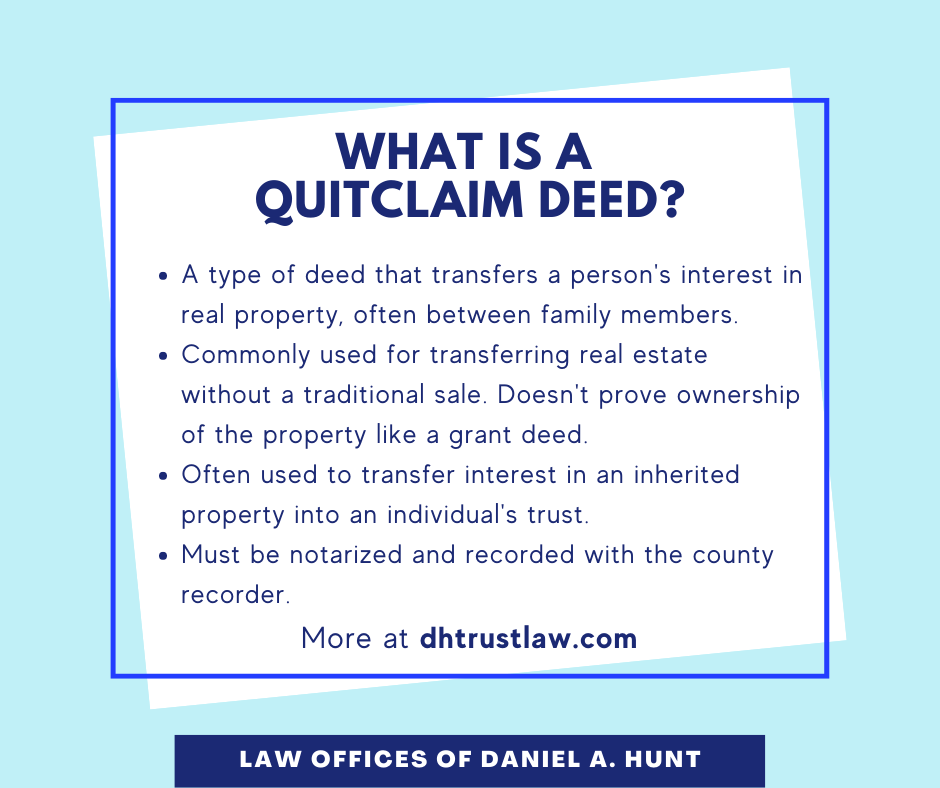
A deed is a legal instrument that transfers legal title of real estate, often from one person to another. A quitclaim deed releases or transfers a person’s interest in a piece of real property, often between family members.
Unlike a grant deed, a quitclaim deed doesn’t guarantee that the person relinquishing their claim to the property had valid ownership. But it does prevent that person from later claiming they have an interest in the property.
When to Use a Quitclaim Deed
Quitclaim deeds are most commonly used for transferring real estate without a traditional sale. Quitclaim deeds are not used for real estate sales, because the new owner receives no guarantees about the validity of the transferred title.
Here are a few common examples of when a quitclaim deed would be appropriate:
- Transferring a person’s share of a property they inherited along with their siblings into their living trust.
- Transferring property between family members, such as parents transferring a home to their children.
- Adding a new spouse’s name to a property that was previously held as one spouse’s separate property.
- Removing an ex-spouse’s name from a property after a divorce, when one spouse is keeping the home.
- Clearing property title when someone else may have an ownership right, but is willing to release their potential claim.
How to Create a Quitclaim Deed
If you think a quitclaim deed may be appropriate for you, consult an estate planning attorney. They can draft a quitclaim deed for you, transferring ownership of the real property from the grantor (or property owner) to the grantee (person receiving the interest). You should sign the deed in front of a notary public.
Preliminary Change of Ownership Report
In California, there is another key document that needs to be signed and filed with the county recorder, along with your trust transfer deed: a Preliminary Change of Ownership Report (or PCOR). Your attorney should prepare a PCOR when they draft your deed.
A PCOR notifies the county assessor’s office of the transfer and informs them that, although a transfer is occurring, no actual sale has occurred. This lets the assessor know that even if the value of your property has increased, they do not need to reassess your property taxes.
Recording Your Deed
After you sign your deed, it must be recorded in the county where the property is located. The recording process and timeline vary by location.
In Sacramento County, it typically takes four to six weeks. In other areas of California, including Los Angeles, San Diego, or Santa Clara County, the process can take several months.
Once the deed is recorded, the county recorder usually mails the original deed back to the homeowner or the attorney who prepared the document. Always keep this deed with your estate planning records for future reference.
Does a Quitclaim Deed Change the Mortgage?
One common question homeowners ask is whether a quitclaim deed affects their mortgage. The answer is no.
Even if you transfer your property by quitclaim deed to another person or into your trust, you remain legally responsible for the mortgage debt. The grantee (person receiving the property) may make payments by agreement, but the grantor is still obligated on the original loan.
This is why it’s important to consult both your lender and your attorney before executing a deed — especially if your property is encumbered by a mortgage or home equity loan.
Need Help Preparing a Quitclaim Deed in California?
At Law Offices of Daniel A. Hunt, our experienced estate planning and real estate attorneys assist clients across California with drafting and recording deeds for property transfers, trust funding, and title clarification. We ensure that each deed complies with current California recording laws and that you avoid unnecessary tax reassessments.
If you’re unsure whether a quitclaim deed is the right option, or you need help completing your Preliminary Change of Ownership Report, our team can help guide you through the entire process from start to finish.
Call us today at 916-488-9788 to schedule your no-cost consultation to discuss your goals for protecting your property and estate.